

I strongly believe in creating a framework that governments globally can adopt fairly quickly and adhere to in order to survive the current international and local corrupt landscapes. This, then, should open a pathway to global implementation and a real “Coalition of the Willing” that benefits all nations.
The goal is not to create an oppressive surveillance bureaucracy, but to establish “Guardian Institutions” whose sole mandate is to defend the public interest, human rights, and democratic sovereignty from corrosive influences. Their power must be balanced by transparency, judicial review, enforcement and civil society partnership.
Proposed New Government Branches / Departments
1. Department of Sovereignty & Ethical Integrity (DSEI)
Mandate: To identify, investigate, and neutralize corrupting influences on the political and regulatory system, whether foreign, corporate, or oligarchic.
Core Responsibilities:
Lobbying & Influence: Lobbying is no longer a form of speech or petition in this day and age—it’s a market for legislative and regulatory power, and that market should be abolished. The transformative goal is to prohibit the conditions that make lobbying corrupt. This means removing private money from politics, enforcing radical transparency, and building robust public-interest institutions. The aim is to transform lobbying from a system of financial coercion back into a system of merit-based persuasion, where the best argument wins, not the best-funded one.
Foreign Influence Audits: Proactively audit institutions (media, academia, NGOs, political groups) for covert foreign state funding or direction. Has subpoena power.
Asset & Conflict Tracking: Mandatory, verified disclosure of assets and potential conflicts for all senior officials and their immediate families. Algorithmic monitoring of policy decisions for patterns benefiting specific private interests.
“Revolving Door” Regulation: Enforce extended cooling-off periods (e.g., 5-7 years) between government service and employment in regulated industries/lobbying firms.
Active Resistance Power: Can impose targeted, escalating sanctions on corrupt domestic actors (e.g., barring companies with convictions from public contracts, freezing assets used for bribery, public censure). Works with justice departments for prosecution.
2. Frontier Technology & Digital Rights Administration (FTDRA)
Mandate: To regulate AI and dominant digital platforms as critical public infrastructure, ensuring they align with human rights, democratic stability, and societal benefit.
Core Responsibilities:
Pre-Market Ethical Certification: Similar to a drug or aviation safety agency. No high-impact AI system (in hiring, policing, resource allocation, etc.) can be deployed without a rigorous, public-interest assessment for bias, societal risk, and human rights impact.
Platform Democracy & Antitrust: Break up or regulate digital monopolies as utilities. Mandate algorithmic transparency and user data sovereignty (portability, deletion). Enforce democratic content governance standards, protecting free speech while curbing algorithmic amplification of hate/disinformation.
Public Option R&D: Fund and develop open-source, public-benefit alternatives to critical AI technologies (e.g., public search engines, social media protocols, foundational AI models) to counter private monopoly.
Global Standards Leadership: Develop the technical and legal standards for ethical AI, pushing for international harmonization.
3. Office of Long-Term Innovation & Human Benefit (OLIHB)
Mandate: To steer economic and innovation policy toward solving humanity’s grand challenges, moving beyond quarterly-profit-driven models.
Core Responsibilities:
Charter Revocation & Reform: Hold corporations to strict, enforceable public benefit charters. Chronic human rights, environmental, or corruption violations can lead to loss of corporate license or forced restructuring.
Mission-Oriented Innovation: Direct public investment (via grants, prizes, R&D) toward moonshot goals (e.g., clean energy, regenerative agriculture, affordable medicine) with conditional, open-access licensing for results.
Alternative Metrics: Replace GDP-centric metrics with a Genuine Progress Indicator (GPI) that accounts for environmental damage, health, inequality, and innovation for public good.
Whistleblower & Civil Society Partnership: Officially fund and protect civil society watchdogs and whistleblowers as a formal check on its own and corporate power.
Structural Safeguards & Inter-Branch Cooperation
Independence: Leaders are appointed via supermajority legislative approval for fixed, single terms, with strict removal criteria.
Transparency: All non-classified investigations, decisions, and metrics are published in open data formats.
Citizen Oversight Panels: Randomly selected citizen juries (like sortition) review major decisions and set annual priorities.
Judicial Review: All actions are subject to review by a specialized Ethical Governance Court (a new high court division).
Collaboration: Works with existing branches:
With Legislature: Provides evidence for laws, but cannot lobby. Legislatures fund them and confirm heads.
With Executive: Implements ethical standards within the government itself. The President/PM sets broad goals but cannot interfere in specific cases.
With Judiciary: Provides expert testimony and enforces judicial decrees related to corruption and tech.
Path to Global Implementation: A Phased “Coalition of the Willing”
Phase 1: National Pioneers (1-2 years)
A coalition of less corrupt, mid-sized democracies (e.g., New Zealand, Costa Rica, Denmark, Taiwan, Botswana) establishes prototype versions of these branches via new constitutional amendments or foundational statutes.
Focus on proving efficacy, building public trust, and ironing out procedures. Share all legal and operational blueprints openly.
Phase 2: Regional Pacts & Treaty Organizations (2-5 years)
Successful pioneers form regional pacts (e.g., an Alliance for Ethical Governance). They agree to mutual audits, share blacklists of corrupt actors, and harmonize AI regulations.
Establish a Global Ethics Fund to support weaker democracies in building these institutions, protecting them from retaliatory capital flight.
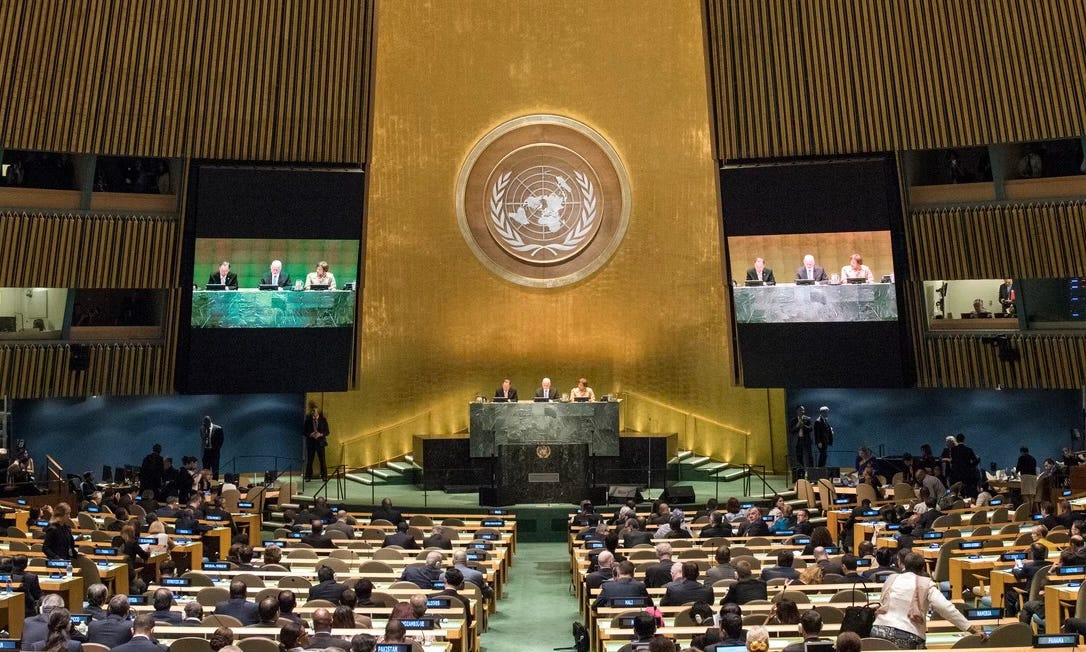
Phase 3: UN Reform & Global Framework (5-8 years)
Reform existing UN bodies (like UNCAC, ITU) or create new, powerful UN Commission on Ethical Sovereignty & Technological Stewardship.
This becomes a treaty-based body with limited but real authority:
Maintains a global registry of anonymous shell companies.
Acts as a binding arbitrator for cross-border digital/AI disputes.
Certifies national ethics agencies; decertification triggers automatic sanctions from member states.
Coordinates a global “Fellow Traveler” policy, where member states jointly deny visas and banking access to individuals/corporations sanctioned by a member’s DSEI for severe corruption.
Phase 4: Cultural & Legal Entrenchment (8+ years)
The principles become embedded in global business school curricula, professional certifications, and international law.
The “Ethical State” model becomes a competitive advantage, attracting talent and sustainable investment, creating a positive feedback loop.
This design proposes moving from a reactive, piecemeal approach to a proactive, systemic architecture of integrity. It flips the script: instead of private interests capturing the state, it designs the state to be inherently resistant to capture and oriented toward long-term human flourishing. The path is long and will face ferocious opposition from entrenched powers, but it starts with a clear vision, a practical first step, and an unwavering commitment to the idea that government, at its best, is a guardian of the common good.